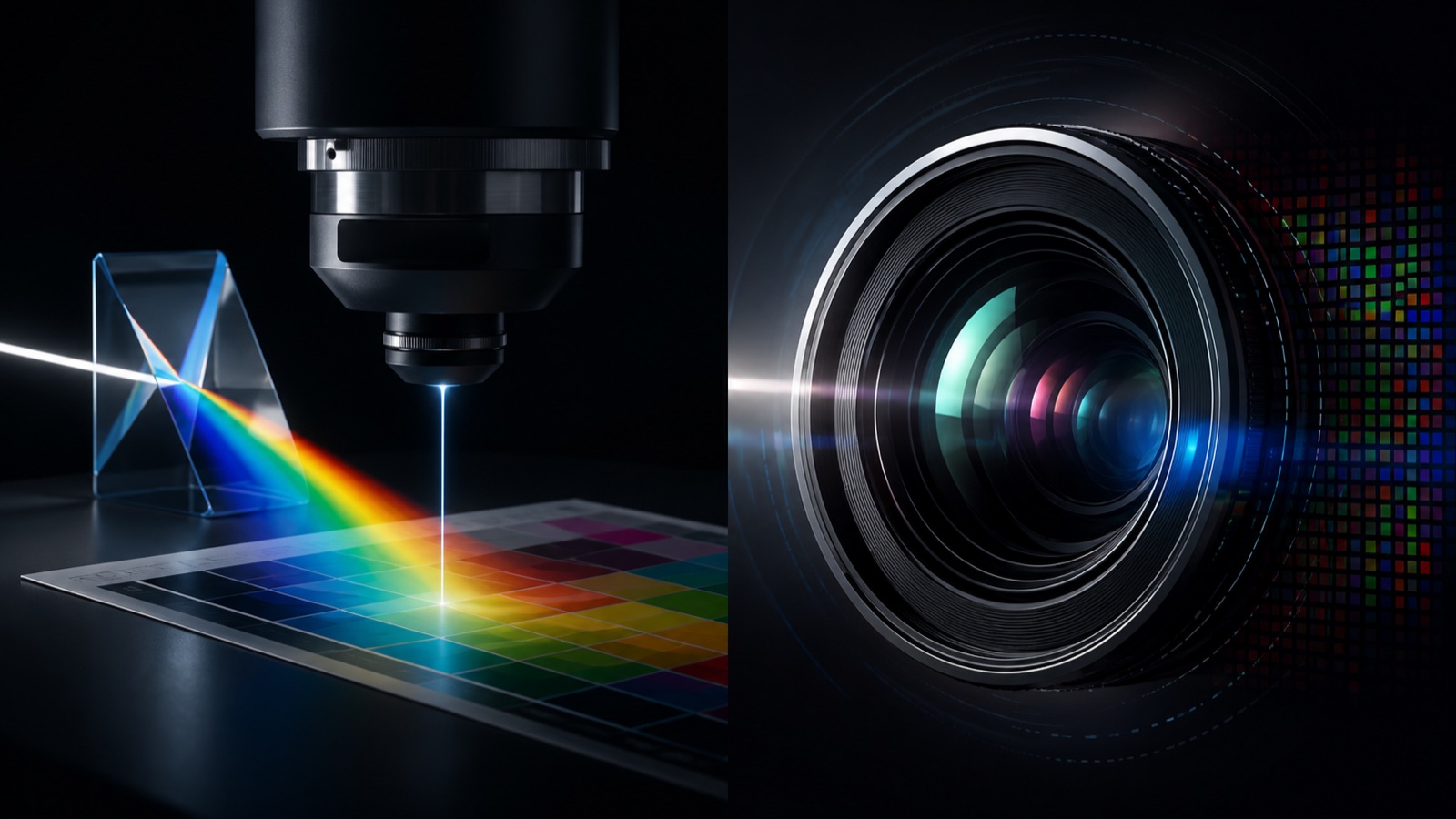
ΔE (Delta E) is a metric for understanding how the human eye perceives color difference. The term "delta" refers to difference, and "E" stands for Empfindung — German for "sensation". In essence, ΔE is a single number that represents the distance between two colors.
What ΔE actually measures.
That distance is not physical but perceptual. It quantifies how far two colors differ from each other as seen by the human eye — not how far apart their raw measurements sit. A target color and the color a press actually puts down can be described in the same terms, and ΔE is the number that separates them. The lower the value, the closer the match.
This is what makes ΔE useful: it turns a subjective judgement — "close enough?" — into a single, comparable figure that two people can agree on without standing over the same light booth.
Why it matters in printing.
In production, every shade and hue counts. ΔE shows up in six places where color either holds or quietly drifts:
Color consistency.
In the printing industry, maintaining color consistency across different prints and batches is crucial. ΔE values help printers understand how close the color of the final print is to the desired color. A lower ΔE value indicates a closer match, ensuring consistency and quality.
Brand integrity.
Precise color reproduction using ΔE measurements ensures that brand colors are accurately represented on various materials, maintaining brand integrity across every surface a customer sees.
Product quality.
In product packaging, accurate color reproduction can influence consumer perception and decision-making. ΔE measurements help maintain the quality and appeal of packaging by ensuring colors are reproduced accurately.
Color matching across media.
Different materials and printing processes can result in color variations. By using ΔE as a standard, printers can achieve a close match between colors printed on different media — ensuring uniformity across brochures, business cards, and product packaging.
Efficiency and cost.
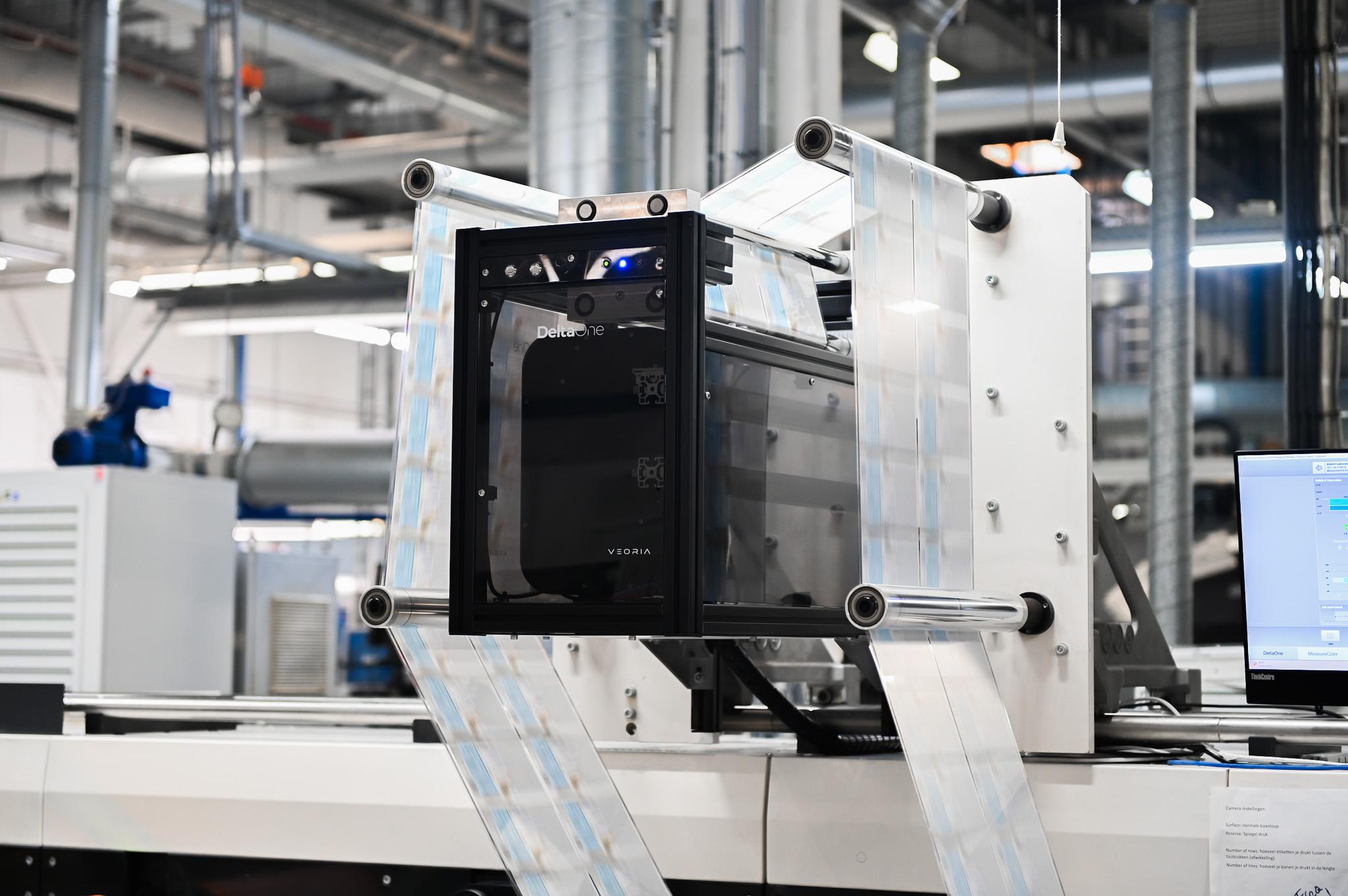
Identifying and correcting color discrepancies early in the printing process saves time and reduces waste. By monitoring ΔE values with inline spectrophotometers such as Veoria's DeltaOne and DeltaWeb, printers can make adjustments in real time — minimising the need for reprints and reducing costs.
Quality control and communication.
ΔE provides a quantifiable measure of color difference, which is useful for quality control and clear communication between clients and printers. By specifying acceptable ΔE values, clients set clear expectations for color accuracy — making for a smoother workflow and fewer disputes.
From a number to a process.
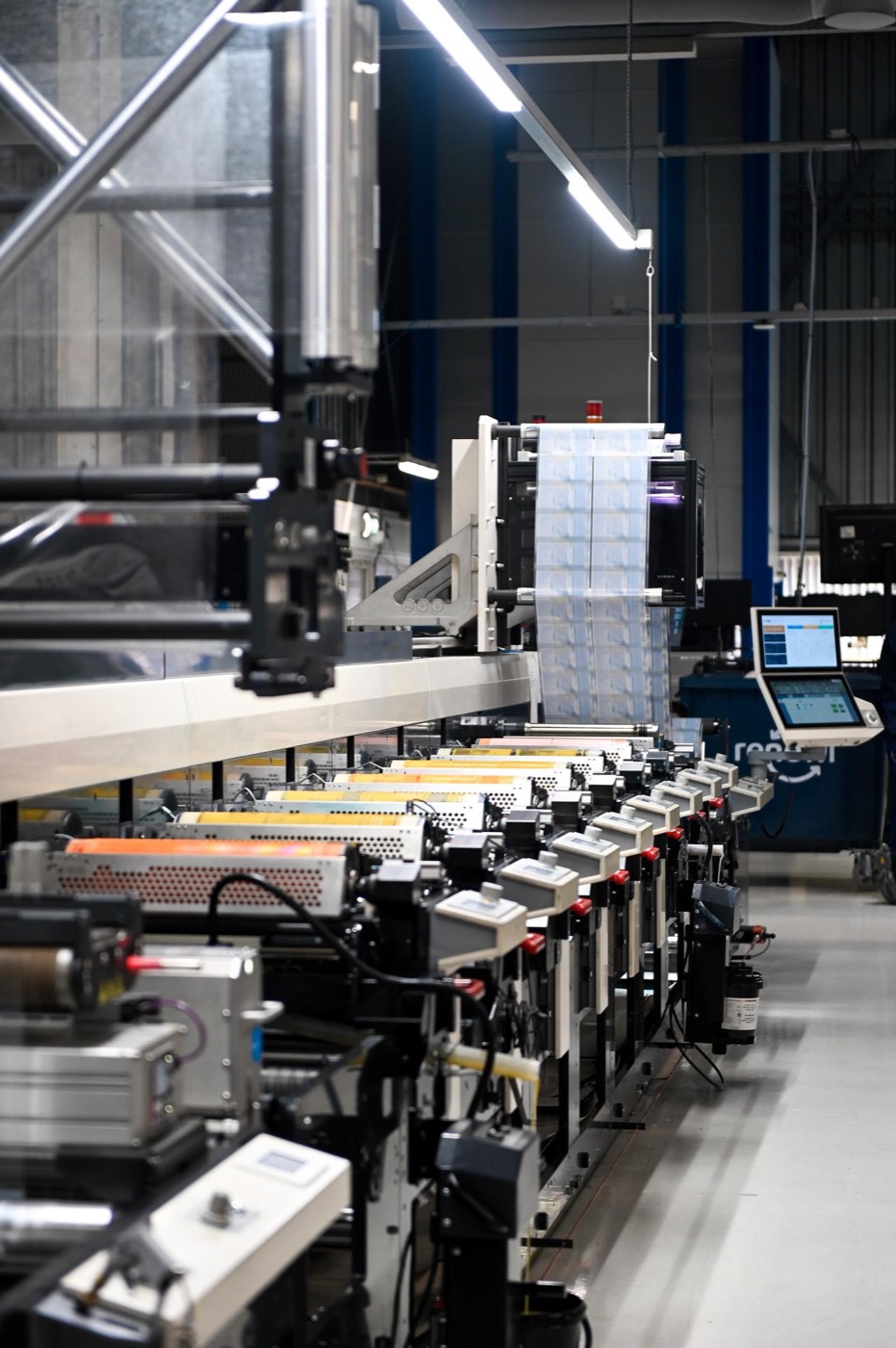
A ΔE figure is only as useful as how often you can read it. Measured offline — stop the press, pull a sample, check it under a booth — ΔE is a verdict delivered after the fact, once the substrate is already printed. Measured inline, it becomes a live readout: deviation is visible the moment it appears, and correction happens while the run is still moving.
This is where ΔE stops being a quality-control checkbox and becomes a control signal. It is the same metric in both cases — what changes is whether you find out in time to act on it.
The takeaway.
ΔE is a vital tool for managing and controlling color accuracy. It allows for precise color matching — ensuring consistency, quality, and efficiency in print production. By understanding and using ΔE values, printers can meet high standards for color reproduction, satisfy client needs, and maintain brand integrity. The fundamentals are simple. The advantage comes from measuring them continuously.
See ΔE measured inline, in real time.
DeltaOne reads color on the moving web and flags every deviation as it happens — no press stop required.
Request a demo